
Pilgrimage & Investment · 8 min read · April 2026
Why India's Pilgrimage Destinations Are the Smartest Place to Own a Second Home
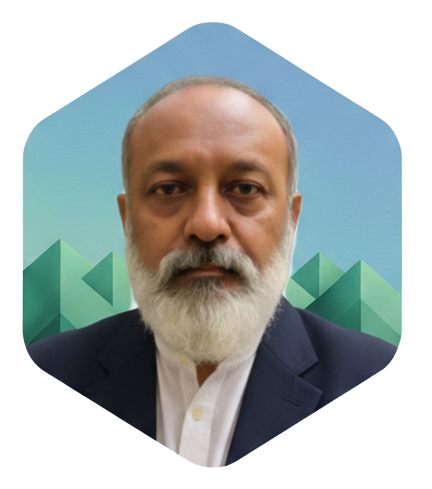
Naveen S
Founder & CEO, Backsea Homes REIT Pvt Ltd
Picture this. It is 4 AM on a January morning. In a mid-size city somewhere in India, an alarm goes off. A family of four — parents, two children — quietly gets dressed. They have been planning this for months. They are going to Tirupati.
They will stand in a queue for six hours in the pre-dawn cold. They will offer their hair. They will whisper prayers that have been whispered in this family for five generations. They will cry a little, without embarrassment. And then they will find a decent hotel, pay too much for an ordinary room, eat at a crowded restaurant, and drive home — exhausted, spiritually replenished, and already wondering when they will come back.
This scene plays out 80,000 times a day at Tirupati alone. At Varanasi, at Rishikesh, at Shirdi, at the Golden Temple, at every Jyotirlinga across the country — a version of this story unfolds, every single day, without pause, without season, without recession.
“India is the most visited pilgrimage nation on earth. And yet, not a single luxury freehold villa network exists at any of its sacred destinations. Until now.”
That is the gap that Backsea Homes is building into. And if you are a family that has ever made that journey — or an investor who understands what 500 million pilgrims a year means in financial terms — this is the most important article you will read this year.
The Numbers That Change Everything
500M+
Annual pilgrimage trips in India
80,000
Daily visitors to Tirupati alone
660M
Attended Maha Kumbh 2025
10M+
Annual visitors to Rishikesh
₹2.5L Cr
India's religious tourism economy
0
Luxury villa networks at pilgrimage sites
Sources: Ministry of Tourism, KPMG Religious Tourism Report, UP Tourism Authority
Read that last number again. Zero. In a country where 500 million pilgrimage trips are made every year, where the religious tourism economy is worth Rs.2.5 lakh crore, where Maha Kumbh 2025 drew more people than the entire population of the United States — there is not a single branded, freehold, professionally managed luxury villa network at any pilgrimage destination in India.
Not at Varanasi. Not at Tirupati. Not at Rishikesh. Not at Shirdi. Not at Vrindavan. Not at Puri. Not anywhere.
“Backsea Homes is building that. Across 100 destinations. Starting now.”
Why Pilgrimage Destinations Beat Every Other Investment Location
When people think of second homes, they think of hill stations and beaches. Ooty. Goa. Manali. These are wonderful places — and Backsea has locations in all of them. But the investment case for pilgrimage destinations is fundamentally stronger, for five reasons that most people have never considered.
The Footfall Is Year-Round — Not Seasonal
A beach villa in Goa earns well from November to February. Then the tourist season ends. A ski chalet in Manali has a three-month window. Even the finest hill stations have a monsoon lull.
Pilgrimage destinations do not have an off-season. The Ganga does not take a holiday. Tirupati does not close for summer. The Golden Temple welcomes every visitor on every day of every year. Varanasi's ghats are alive at 4 AM on the coldest day of January and at 2 PM on the hottest day of May.
Year-round footfall means year-round rental income. Your villa does not sit empty for four months while your EMI keeps running. It earns — consistently, reliably, in every season.
The Emotional Pull Is Generational — Not Transactional
A family that visits Goa does so because it is a holiday. They may go to Coorg next year, or Kasol, or Pondicherry. The choice is lifestyle-driven and constantly changing.
A family that visits Varanasi does so because their grandfather's ashes were immersed in the Ganga there. A family that goes to Tirupati does so because they made a vow during their child's illness. A family that visits the Golden Temple does so because their faith lives there.
That is not a holiday. That is a covenant. And families with covenants to a place return to it — year after year, decade after decade, generation after generation.
“Owning a Backsea villa near your family's sacred destination is not buying a second home. It is buying a permanent address for your family's most important ritual.”
The Infrastructure Is Already Arriving — Government-Funded
Here is what makes the timing of Backsea's strategy extraordinary. The Government of India has selected 100 Smart Cities for accelerated infrastructure investment. And — not by coincidence — most of India's major pilgrimage and tourism destinations are either directly listed as Smart Cities or sit within 50 to 100 kilometres of one.
Varanasi is a Smart City — and the Kashi Vishwanath Corridor has already transformed it with Rs.800 crore of investment. Tirupati is a Smart City — with a new greenfield airport and four-lane road infrastructure. Haridwar is a Smart City — with the Rishikesh-Haridwar belt receiving massive connectivity upgrades. Ayodhya, transformed by the Ram Mandir, has received Rs.30,000 crore of government infrastructure investment in 36 months.
You do not need to hope the infrastructure will arrive. In most Backsea pilgrimage locations, it is already here — or officially committed and under construction.
The Land Is Still Affordable — The Window Is Closing
This is the critical point that every serious investor must understand. The land prices near India's pilgrimage destinations today are a fraction of what they will be in five to ten years.
| Destination | Land Today (per acre) | Comparable Leisure Dest. | Land Today (per acre) | Appreciation Potential |
|---|---|---|---|---|
| Prayagraj outskirts | Rs.10-20 Lakh | South Goa | Rs.55-85 Lakh | 5-8x undervalued |
| Ujjain outskirts | Rs.8-18 Lakh | Mahabaleshwar | Rs.30-55 Lakh | 4-6x undervalued |
| Madurai outskirts | Rs.12-22 Lakh | Munnar, Kerala | Rs.30-55 Lakh | 3-5x undervalued |
| Vizag-Araku Valley | Rs.15-25 Lakh | Coorg | Rs.35-65 Lakh | 3-4x undervalued |
| Varanasi outskirts | Rs.15-35 Lakh | Udaipur outskirts | Rs.15-45 Lakh | Equal + higher footfall |
The post-Ram Mandir consecration saw land prices in Ayodhya rise 300% in 18 months. The post-Kashi Vishwanath Corridor completion saw Varanasi property values surge 40% in two years. This is the pattern — and it is repeating itself across every Smart City-adjacent pilgrimage destination in India right now.
Those who enter early, with freehold title and a professional management structure, capture the appreciation. Those who wait will pay 3x for the same land in 2030.
The Buyer and the Renter Are Both Already There
In most real estate investments, you build it and hope they come. In pilgrimage destinations, they are already there. They have been coming for centuries.
Your villa buyer is the devout professional family from Bengaluru who visits Dharmasthala three times a year and has always wished they had their own place there. Your rental guest is the pilgrim family from Hyderabad who comes to Tirupati for the second time this year and wants something better than the crowded guest house.
The demand is not speculative. It is structural. It is cultural. It is 3,000 years old. And it is not going anywhere.
A Glimpse of the Backsea Pilgrimage Portfolio
Backsea Homes has identified 70 spiritual and pilgrimage destinations — all near Smart Cities, all with proven tourist footfall, all with scenic beauty (river, hills, coast, or forest), and all significantly underserved in the luxury accommodation segment. Here is a small window into what this portfolio looks like:
| Location | Sacred Significance | Scenic Asset | Annual Visitors | Land (L/acre) |
|---|---|---|---|---|
| Ramnagar, Varanasi | Ganga ghats — 3,000 year pilgrimage city | Ganga Riverfront | 70 Lakh+ | Rs.18-30 |
| Jhunsi, Prayagraj | Triveni Sangam — Kumbh Mela capital | Ganga-Yamuna Confluence | 660M (Kumbh 2025) | Rs.12-20 |
| Shivpuri, Rishikesh | Yoga Capital — Char Dham gateway | Himalayan Ganga Gorge | 1 Crore+ | Rs.30-45 |
| Chandragiri, Tirupati | Gateway to world's most visited shrine | Seshachalam Hills | 3 Crore+ | Rs.22-35 |
| Alagar Hills, Madurai | Meenakshi Amman circuit | Western Ghats Forest | 50 Lakh+ | Rs.14-22 |
| Srirangam, Trichy | World's largest functioning temple | Sacred Kaveri Island | 40 Lakh+ | Rs.20-35 |
| Dharmasthala, Mangaluru | 4M visitors/year — zero entry fee | Western Ghats + River | 40 Lakh+ | Rs.18-30 |
| Kamakhya, Guwahati | Tantric pilgrimage — Brahmaputra views | Brahmaputra Riverfront | 20 Lakh+ | Rs.20-35 |
| Bodhgaya, Patna | Buddha's enlightenment — UNESCO | Phalgu River | 10 Lakh+ | Rs.18-35 |
| Yadadri, Hyderabad | Rs.1,800 Cr newly renovated temple | Deccan Plateau | 25 Lakh+ | Rs.20-35 |
This is 10 of 70 spiritual locations in the Backsea portfolio. Full list available on request.
What This Actually Means for a Family Like Yours
Enough numbers. Let us return to the family we met at the beginning of this article.
Imagine that same family — the one who queues for six hours at Tirupati, who cries quietly in the temple, who has been making this journey for as long as anyone can remember — but this time, something is different.
This time, instead of a hotel room booked three months in advance (and still not quite right), they drive 40 minutes from Tirumala to their Backsea villa in Chandragiri. Their villa, with their name on the title deed. The one with the veranda overlooking the Seshachalam Hills. The one where their children have started recognising the birds that come to the garden every morning.
Their parents stay in the villa next time. Their children bring their own children someday. The pilgrimage — which was always a ritual — becomes something even deeper: a return. To a place that belongs to them. To a place that will still be there, unchanged and welcoming, long after they are gone.
“The most sacred gift a parent can give a child is not money. It is memory. And memory needs a place to live.”
And while the family is in Bengaluru, going about their lives? The villa earns. Quietly, professionally, transparently. Every rental day credited to their account. The pilgrimage home paying for itself, year after year.
This is what Backsea is building. Not just a real estate portfolio. A network of places where India's families can come home — to their faith, to their roots, to themselves.
A Word for the Investor Reading This
If you have read this far not as a potential homeowner but as an investor — welcome. The numbers speak clearly.
| The Investment Case | Why It Is Compelling |
|---|---|
| Structural demand | 500M pilgrimage trips/year — demand is not cyclical, it is cultural and permanent |
| Zero competition | No branded luxury freehold villa network exists at any pilgrimage destination in India today |
| Government tailwind | Smart City investment is flowing into exactly these corridors — infrastructure is government-funded |
| Land appreciation | Post-infrastructure, pilgrimage land prices historically rise 3-8x. Ayodhya rose 300% in 18 months. |
| Rental yield | Rs.7,000/day benchmark. 120-day conservative occupancy = Rs.5.88L/year per villa at 70% share |
| REIT pathway | 10 locations trigger SEBI REIT listing eligibility — institutional exit mechanism built in |
| First mover | The window to acquire land at current prices is 24-36 months. Post-Smart City completion, it closes. |
India's pilgrimage economy is Rs.2.5 lakh crore and growing at 12% annually. Backsea Homes is positioning itself as the first organised, scalable, REIT-structured participant in this market. The vision is 100 locations. The first four are already underway. The land is real, the approvals are in hand, and the team is assembled.
The question is not whether this market will be captured. The question is who will capture it.
The Hills Are Calling. The River Is Waiting.
India is the only civilisation on earth where pilgrimage is not a once-in-a-lifetime event but a way of life. Where the sacred is not separate from the everyday but woven through it. Where a family will travel 1,000 kilometres to stand at a riverbank and feel, for a few moments, that everything is exactly as it should be.
That feeling deserves a home. A real one. With your name on it. In the place that matters most to your family.
Backsea Homes is building that home — across 70 pilgrimage destinations, 30 leisure destinations, and 100 places where India's families have always gone to find themselves.
“Own where India prays. Own where India heals. Own where India comes home.”
If this vision speaks to you — as a buyer, as an investor, or simply as someone who believes India deserves better than a crowded guesthouse near its most sacred places — we would love to hear from you.
About the Author
Naveen S — Founder & CEO, Backsea Homes REIT Pvt Ltd
With over 37 years of distinguished banking experience — rising to Chief Manager at Corporation Bank through its merger with Union Bank of India — Naveen brings financial rigour, long-term thinking, and a deep belief in India's potential to every pillar of Backsea Homes. He is the architect of the model, the custodian of the vision, and the person who believes, above all else, that India's families deserve a second home that honours both their aspirations and their roots.